Hokkaido Road Trips You Can Only Do After the Snow Melts
 staff
staffMost people think of Hokkaido as a winter destination. Deep powder, steaming onsen, snow-covered villages. And that version of Hokkaido is real, and worth the trip. But there is another Hokkaido that only appears when the snow pulls back — one with open mountain passes, brilliant blue coastlines, rolling green hills, and roads that have been buried under meters of snow since November. Spring is when Hokkaido reveals its full map, and the best way to see it is behind the wheel.
If you have been to Niseko for skiing and never returned in the warmer months, you have only seen half the picture. The roads that open between late April and May connect landscapes that feel like they belong in different countries. In a single day of driving, you can pass volcanic lakes, fishing villages, lavender-dotted hillsides, and mountain passes still lined with snow walls. All you need is a car and a willingness to get a little lost.
When the Roads Open: Timing Your Spring Drive
Hokkaido's mountain roads and scenic passes close for winter, usually around November, and reopen sometime between late April and late May depending on snowfall and elevation. The exact dates shift each year, so checking road status before you set out is essential. The Hokkaido Regional Development Bureau publishes seasonal road opening information, and local tourism offices are another reliable source.
Late April through mid-May is the sweet spot. The snow walls along higher-elevation roads can still be several meters tall, creating a dramatic corridor effect as you drive through. Cherry blossoms, which bloom much later in Hokkaido than on the main island, are often at their peak during this window. And the weather is generally mild — cool mornings, comfortable afternoons, and long daylight hours that give you more time on the road.
A few things to keep in mind: some roads may have limited hours in the early weeks after reopening, closing at night when temperatures drop below freezing. Watch for wet surfaces from snowmelt runoff, and be aware that occasional rockfall warnings can close sections temporarily. For a detailed look at spring road conditions and what to expect behind the wheel, see our guide to driving Hokkaido in spring. None of this should discourage you. It is just part of driving in a landscape that is still waking up from winter.
Five Spring Road Trips Worth the Drive
Niseko to Lake Toya
This is the classic starter route — about 90 minutes of driving through some of Hokkaido's most photogenic terrain. Heading south from Niseko, you pass through farmland with Mount Yotei (often called "Ezo Fuji" for its near-perfect volcanic cone) dominating the view behind you. As you approach Lake Toya, the landscape shifts to volcanic terrain shaped by the 2000 eruption of Mount Usu. The lake itself is a caldera lake, deep blue and ringed by forested hills. Stop at the Toya Lake Visitor Center to see the eruption exhibits, or just park and walk along the lakeshore. In spring, the cherry trees around the lake bloom beautifully, and there are far fewer tourists than in summer.
The Shakotan Peninsula Loop
Shakotan Peninsula is where Hokkaido meets the Sea of Japan in the most dramatic way possible. The coastal road winds along cliffs that drop straight into water so clear and blue it has its own name: Shakotan Blue. Cape Kamui, the peninsula's western tip, is a narrow rocky point that juts into the ocean with a walking trail along its spine. The drive from Niseko takes about two hours, and the peninsula loop itself adds another two to three hours depending on stops. Spring is ideal because the summer crowds have not arrived yet, the wildflowers are starting, and the light over the water in the late afternoon is extraordinary. Pick up fresh uni (sea urchin) at one of the small fishing ports along the way — Shakotan is famous for it.
Furano and Biei
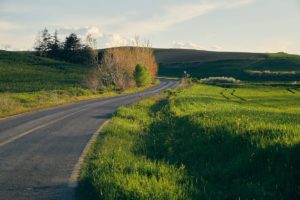
Most visitors associate Furano and Biei with summer lavender fields, but the spring version has its own quiet appeal. The rolling hills of Biei are covered in freshly planted patchwork farmland — bright green, brown, and yellow rectangles that stretch to the horizon. Furano's fields are just starting to wake up, and the area has a peaceful, unhurried quality that disappears once tour buses arrive in July. The drive from Niseko takes about three hours via the expressway through Sapporo, or you can take a more scenic inland route. Stop at Farm Tomita even before the lavender blooms — there are other flowers in season, and the farm shop sells excellent lavender ice cream year-round.
Otaru to Yoichi: Wine, Whisky, and Seafood
This short coastal drive — about 30 minutes each way — packs in a surprising amount. Otaru is a charming port city with a famous canal district, excellent sushi, and a historic warehouse area that has been converted into shops and cafes. From there, the road west to Yoichi follows the coast past small fishing harbors. Yoichi is home to the Nikka Whisky Distillery, one of Japan's most celebrated whisky producers, where you can tour the grounds and sample their single malts. The area is also emerging as a wine region, with several small wineries producing cool-climate varietals. From Niseko, the whole loop — Niseko to Otaru to Yoichi and back — makes a perfect day trip of about three hours of driving plus time for stops.
Lake Shikotsu and Chitose
Lake Shikotsu is Hokkaido's second-largest caldera lake, and it holds a remarkable record: the clearest water of any lake in Japan, a title it has claimed multiple years running. The drive from Niseko takes about two hours, passing through forests that are especially beautiful in spring when fresh green leaves mix with the darker conifers. The lake is surrounded by mountains, including the active volcano Mount Tarumae, which you can hike in the warmer months. There is a small hot spring village on the lakeshore — a good place to stop for lunch and a soak. If you are catching a flight from New Chitose Airport, this route works well as a final-day drive, since Chitose is only about 40 minutes from the lake.
All five of these routes start from the Niseko area, making it the ideal base for a spring Hokkaido driving adventure. If you want the freedom to explore these scenic drives at your own pace, check out rental options at Land-N-Cruise before you finalize your itinerary.
Tips for Getting the Most Out of a Spring Road Trip
Start early. Spring mornings in Hokkaido are stunning. The light is soft, the roads are empty, and popular spots like Cape Kamui or the Biei hills are yours alone before 9 AM. An early start also gives you more flexibility for unplanned stops.
Use michi-no-eki. Michi-no-eki (roadside stations) are one of Japan's best travel inventions. These government-designated rest stops appear along major routes and offer clean restrooms, local food, regional souvenirs, and tourist information. Many have small restaurants serving dishes made with ingredients from the surrounding area. In Hokkaido, michi-no-eki are spaced well along most driving routes, and they make natural break points on longer trips.
Eat what spring brings. Hokkaido in spring means sansai (mountain vegetables) — wild ferns, bamboo shoots, and other foraged greens that appear on menus at local restaurants and izakaya. Jingisukan (grilled lamb, named after Genghis Khan) is available year-round but tastes best outdoors on a spring afternoon. Fresh dairy is everywhere — soft-serve ice cream from local farms is practically a Hokkaido driving ritual. And if you pass through a fishing town, whatever came in that morning is what you should eat.
Fill up on gas when you can. Hokkaido is big and parts of it are genuinely remote. Gas stations in rural areas may close early or be spaced far apart. A good rule is to fill up whenever your tank drops below half, especially if you are heading into mountain or coastal areas away from main highways.
Bring layers. Spring weather in Hokkaido can shift quickly. A sunny morning can turn into a chilly afternoon at higher elevations, and coastal areas get wind. Pack a light jacket even if the forecast looks warm.
Start Your Spring Road Trip from Niseko
Spring in Hokkaido is a different world from winter, and driving is the way to experience it properly. Trains and buses connect the major cities, but the landscapes that make Hokkaido special — the empty coastal roads, the mountain passes with snow walls, the hidden lakes and hilltop viewpoints — are only accessible by car. From Niseko, you are already in the center of Hokkaido's best driving territory, with every route in this article reachable as a day trip or overnight excursion.
If you are ready to see what Hokkaido looks like after the snow melts, reserve a car from Land-N-Cruise and build your own itinerary. No fixed tour schedule, no crowded bus, just you and the open road through one of Japan's most beautiful regions. The snow is gone, the roads are open, and Hokkaido is waiting.