Why Japanese Vending Machines Hit Different at a Ski Resort
 staff
staffHot Drinks, Cold Mountain: The Selection Is Quietly Impressive
A vending machine at a ski resort in North America might offer you a Coke and a bottle of water. A Japanese vending machine at a ski resort offers you a lifestyle. The hot drink section alone could keep you busy for an entire ski season. Canned coffee in at least four variations (black, milk, sugar, extra milk) — look for Boss Coffee by Suntory and Georgia Coffee by Coca-Cola Japan, the two giants of the canned coffee world. Royal milk tea, a richer and creamier version of milk tea that is a Japanese staple. Hojicha (roasted green tea). Hot lemon. And the crown jewel: canned corn potage, a creamy corn soup that tastes like it was made by someone who actually cares about you.
Then there is the cold side. Green tea, sports drinks, fruit juices, and occasionally something mysterious with a name you cannot quite translate but buy anyway because the packaging looks cheerful. Some machines carry seasonal items — sakura-flavored drinks in spring, warm amazake (sweet fermented rice drink) in deep winter. The selection rotates just often enough that you never get bored.
Most drinks cost between 100 and 160 yen (roughly $0.70 to $1.10). Machines accept 10, 50, 100, and 500 yen coins, plus 1,000 yen bills. They always give correct change. Smaller coins (1 and 5 yen) will not work, so do not bother trying. You can spot hot items by the red label beneath the display and cold items by the blue label — a simple system that works perfectly even if you cannot read a word of Japanese.
One detail that most visitors miss: the temperature of the hot cans is carefully calibrated. They are hot enough to warm your hands through ski gloves, but not so hot that you burn yourself when you crack one open. Someone, somewhere, spent time thinking about this. That is the kind of design consideration that makes Japan, well, Japan.
And then there is the "HOT" and "COLD" divider inside the machine. The boundary between the warm section and the cold section shifts with the seasons. In midwinter, most of the machine is hot. By late spring, the balance flips. It is a small, invisible act of seasonal hospitality that nobody asked for but everyone benefits from.
Niseko Vending Machines: Location, Location, Location
The placement of vending machines at Japanese ski resorts is something between urban planning and art. There is always one right next to the lift line, positioned so you can grab a drink during the wait without losing your spot. There is usually one at the top of the gondola, which makes zero logistical sense — someone had to haul that machine and its inventory up a mountain — but makes perfect emotional sense when you step off the gondola into a wall of wind and cold.
The most poetic vending machine placement, though, is the lone unit in a far corner of the parking lot. It stands there by itself, glowing in the dark at 6 a.m. when you arrive for first tracks (the first run of the day), or at 9 p.m. when you finally drag yourself back to the car after night skiing. No staff, no building, just a machine in the snow, doing its job. There is something almost science-fiction about it — a solitary beacon of warmth and commerce in an otherwise empty landscape.
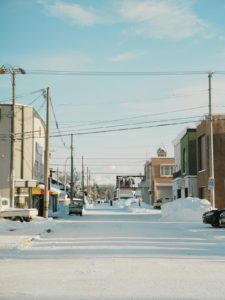
If you are driving between ski areas in Hokkaido, you will find vending machines at rest stops, gas stations, and random roadside pulloffs where they have no business being but somehow feel essential. They break up long drives through snowy countryside and give you an excuse to step outside, stretch, and appreciate wherever you happen to be. For anyone exploring Niseko and beyond by rental car, these little stops become part of the rhythm of the trip. One tip: corn soup is the first to sell out at busy resorts, so grab one early in the day if you want the full experience.
Japanese Vending Machine Culture: A Small Miracle
Here is something that foreign visitors notice almost immediately: the machines work. Every time. You put in your money, you press the button, you get your drink. The change comes out correctly. The product does not get stuck. There is no "OUT OF ORDER" sign held on with packing tape. This sounds unremarkable until you think about vending machines in most other countries, where the success rate hovers somewhere around "maybe."
The machines are clean. They are not vandalized. The buttons light up. The display is easy to read. If you have ever wrestled with a parking meter in a foreign city or lost money to a snack machine in an airport, you know how rare this level of reliability actually is. In Japan, it is the default.
For visitors who have never encountered Japanese vending machine culture, there are a few surprises in store. The corn soup thing gets everyone — yes, it is soup, yes it is in a can, yes those are actual corn kernels floating around in there, and yes, it is genuinely delicious. Some machines now accept IC cards (rechargeable transit and payment cards you can buy at any train station — Hokkaido uses Kitaca, though Suica and Pasmo from Tokyo work too) or QR code payments, which is convenient once you figure it out. The interface is not always obvious on the first try, but the machine is patient. It will wait.
One more thing: when you finish your drink, look for the recycling bin right next to the machine. Nearly every vending machine in Japan has one. Cans go in the cans slot, bottles in the bottles slot. Do not toss them in a regular trash bin — Japan takes recycling seriously, and this is one of the easiest ways to be a good guest.
The unwritten rules of Japanese ski lifts might take some getting used to, but vending machines are blessedly straightforward. No cultural knowledge required. Just coins and curiosity.
Why Ski Resort Vending Machines Feel Special
Japan's hospitality culture — often called omotenashi — runs deep. It shows up in the way hotel staff bow when you leave, the way convenience store clerks handle your change with both hands, and the way train conductors bow to empty carriages. Vending machines are part of this same impulse — the idea that someone should be able to get what they need, whenever they need it, without friction or fuss.
At a ski resort, this philosophy hits harder. You are cold, tired, and possibly lost. And right there, in the snow, a machine offers you a warm drink for 130 yen. No tipping, no waiting, no small talk. Just warmth in a can. It is hospitality stripped down to its most basic and most effective form.
There is a real argument to be made that vending machines contribute to the "I want to come back" feeling that Japanese ski resorts create. It is not any single thing. It is the accumulation of small, thoughtful details — heated toilet seats, perfectly groomed runs, staff who wave at your car as you leave the parking lot, and yes, a hot can of Royal Milk Tea waiting for you at the bottom of the gondola. Every ski resort in the world should take notes. Honestly, every ski resort in the world should just import these machines directly.
The Vending Machine Road Trip
Here is a thought that sounds ridiculous but is actually kind of great: plan part of your Hokkaido trip around vending machines. Not as the main event, obviously, but as a running side quest. Every time you stop — at a ski resort, a roadside rest area, a random mountain parking lot — try something new from the machine. Keep a mental ranking. Debate the merits of Boss Coffee versus Georgia Coffee with your travel companions. Discover that hot lemon from a can is surprisingly good at altitude.
Hokkaido is built for this kind of slow-discovery driving. The distances between towns are long, the scenery is enormous, and there is no shortage of quiet places to pull over and take in the view with a warm drink. After a day of skiing at Niseko, the drive back to your accommodation is a lot more enjoyable when you have a can of something hot in the cupholder. If you are also looking for things to do when the lifts close, the vending machine is your pre-dinner warmup.
The beauty of traveling Hokkaido by car is that you set your own pace. No bus schedules, no train connections. Just you, the road, and an endless supply of vending machines ready to surprise you with something warm, cold, sweet, or inexplicably corn-flavored. If you are new to driving in Hokkaido, the roads are easier than you think — and the vending machine stops make even the longest stretches enjoyable.
If you want to explore Hokkaido's ski resorts and Japanese vending machine culture at your own pace, grab a rental car from Land-N-Cruise. All winter vehicles come with studless tires and 4WD options are available for extra confidence on snowy roads. The best sip of your trip might just come from a glowing machine in a snowy parking lot. You will not see it coming, but you will not forget it either.